
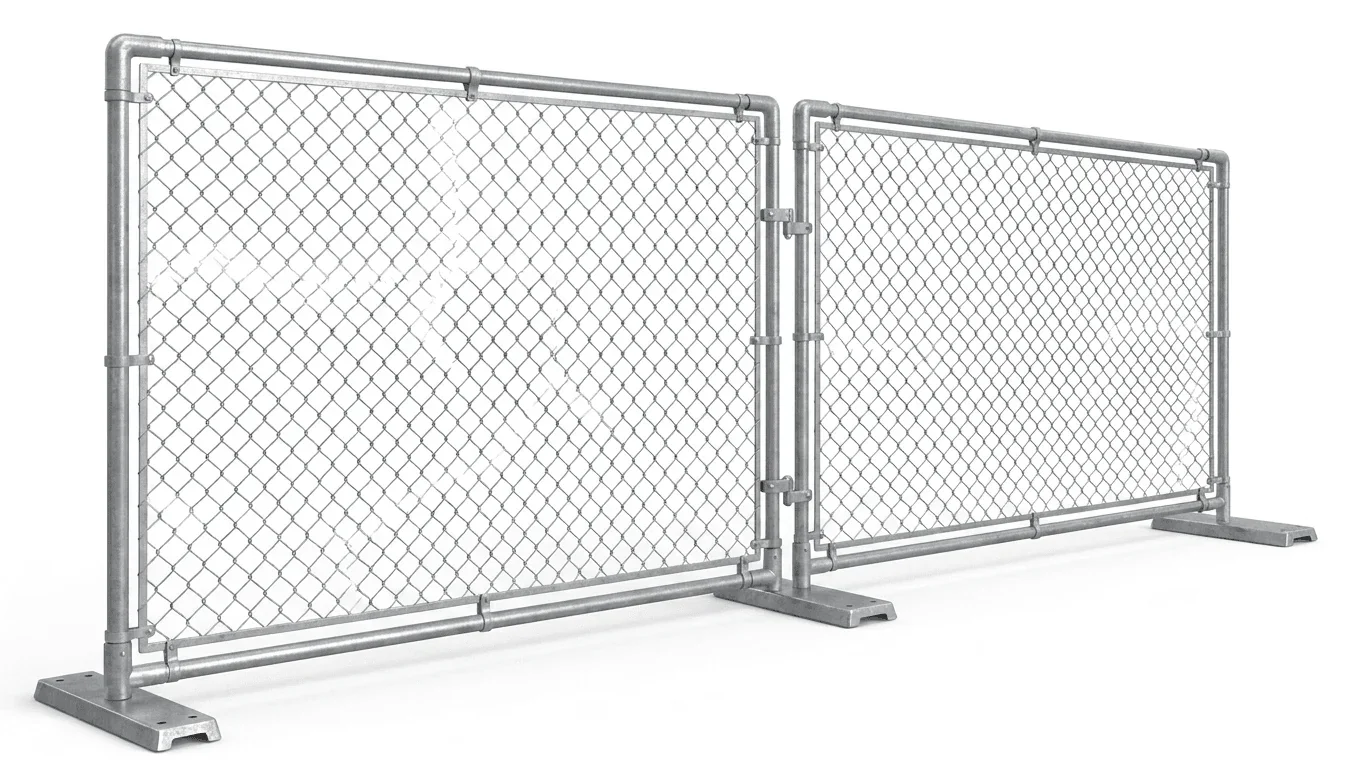
Surface and base style on Daytona sands
Deep, loose sands reduce the effectiveness of narrow bases. Where panels cross soft ground, wider footprints or site-stability factors planning keep lines true. Transitions from sand to pavement—common around beachfront lots—benefit from mixed bases so panels don’t pinch or tilt at the seam.
Wind and visibility near open exposures
Waterfront corridors and large paved expanses can funnel wind. Solid screening increases wind load and can shift panels. Choose panel openness and site-stability factors plans that match expected exposure so lines remain aligned near crowd lanes or construction staging.
Access routes for equipment and lifts
If scissor lifts, boom lifts, or telehandlers must pass through, create controlled openings with stable ends and clear swing room. For overhead work that shares space with pedestrian routes, coordinate barrier offsets with aerial equipment such as /electric-scissor-lift-rental/, /rough-terrain-scissor-lift-rental/, and /articulating-boom-lift-rental/ to maintain safe separation. For long reaches over fencing lines, see /telescopic-boom-lift-rental/.
Event and construction use cases
- Large venue perimeters: favor consistent panel height for sightlines and clear gate locations for vendor logistics.
- Beachfront maintenance: lighter sections ease repositioning across sand, while corrosion-resistant hardware holds alignment longer in salt air.
- Active buildouts: combine fencing with barricades to channel foot traffic around material drops and lift charging zones.
Corrosion considerations
Salt spray accelerates rust on connectors and feet. Hardware with protective finishes maintains clamp strength and panel fit over multi-week deployments near the shoreline.