Define the job load and duty cycle
Start with peak and continuous amperage. Night work at coastal resorts, hangar maintenance, and large event setups tend to cycle between high draws and long idle lighting hours. The duty pattern determines whether a smaller unit with smart load management works or a larger generator prevents frequent ramping.
Key load factors to identify: - Starting vs running watts for HVAC, pumps, and lift chargers - Voltage and phase for site panels and tools - Expected runtime between refuel windows and noise limits near guest areas
Surface and placement in sandy conditions
The local “Daytona series” sands are deep and can shift under point loads. Generators and light towers placed on these surfaces may need wide-base footing or outrigger pads to stay level. Check whether the unit can sit below the task area without blocking egress. On beachfront maintenance, salt spray and wind-blown sand can influence air filtration schedules and enclosure choice.
Access route and refueling logistics
Map the path from delivery drop to final location. Narrow boardwalks, soft lots, and service alleys change which chassis and tire profile make sense. For large complexes and industrial sites, plan fuel truck access and turnaround so runtime targets are realistic during extended night shifts.
Lighting geometry for coastal and speedway-scale areas
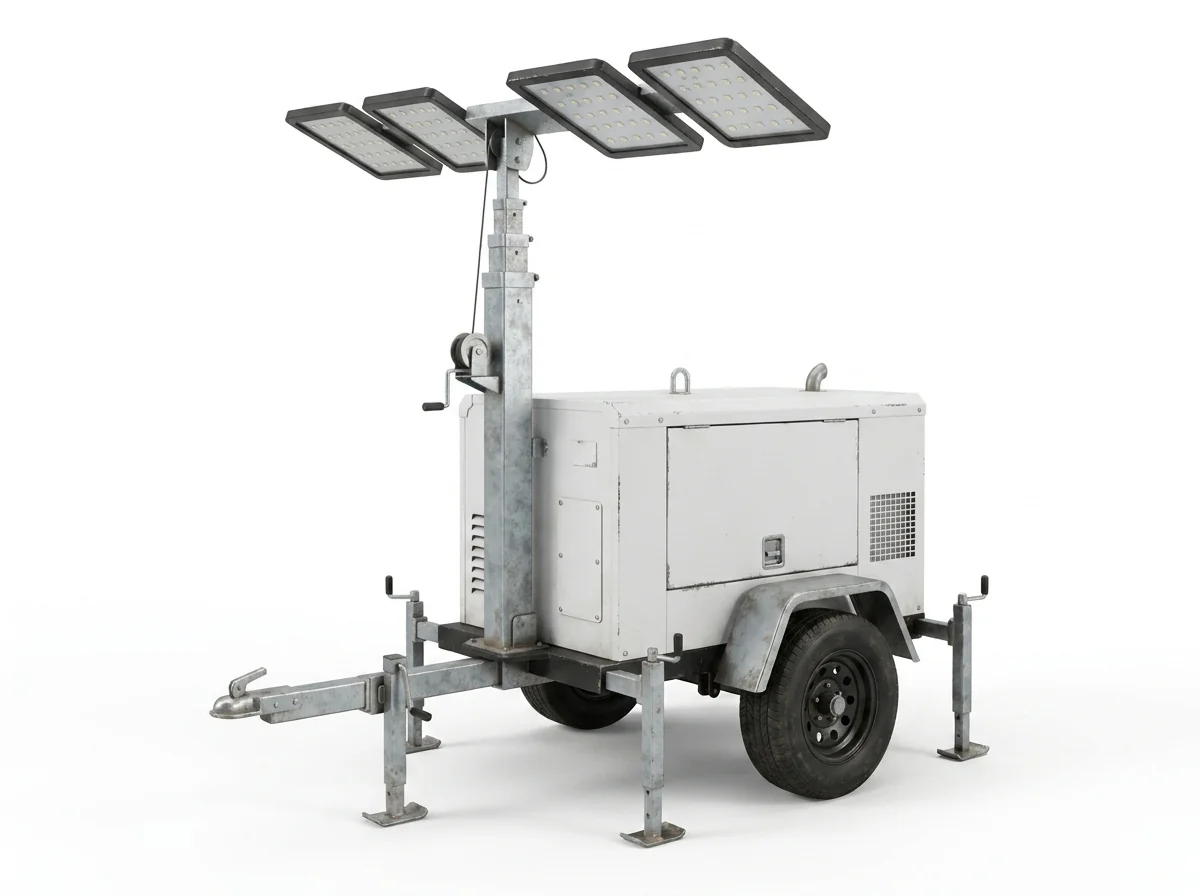
Light towers differ by mast height, lamp type, and aiming range. On large paved expanses or apron areas, taller masts reduce shadowing across wide spans. In hospitality courtyards and pedestrian zones, shorter masts with tighter beam control minimize spill onto neighboring properties. Humid, salty air can scatter light; expect more glare near water and choose lamp output accordingly.
Corrosion and maintenance intervals in salt air
Coastal exposure accelerates oxidation on frames, connectors, and fasteners. Units with sealed electrical connections and robust coatings hold up better. For multi-night events or extended projects, document inspection intervals around air intake, alternator ventilation, and mast cabling.
Related comparisons
- For elevated service lighting or power to aerial chargers, see /electric-scissor-lift-rental/ and /rough-terrain-scissor-lift-rental/
- For overhead access near lighting arrays, review /aerial-lift-rental/, /boom-lift-rental/, and /articulating-boom-lift-rental/