When an articulating boom makes sense
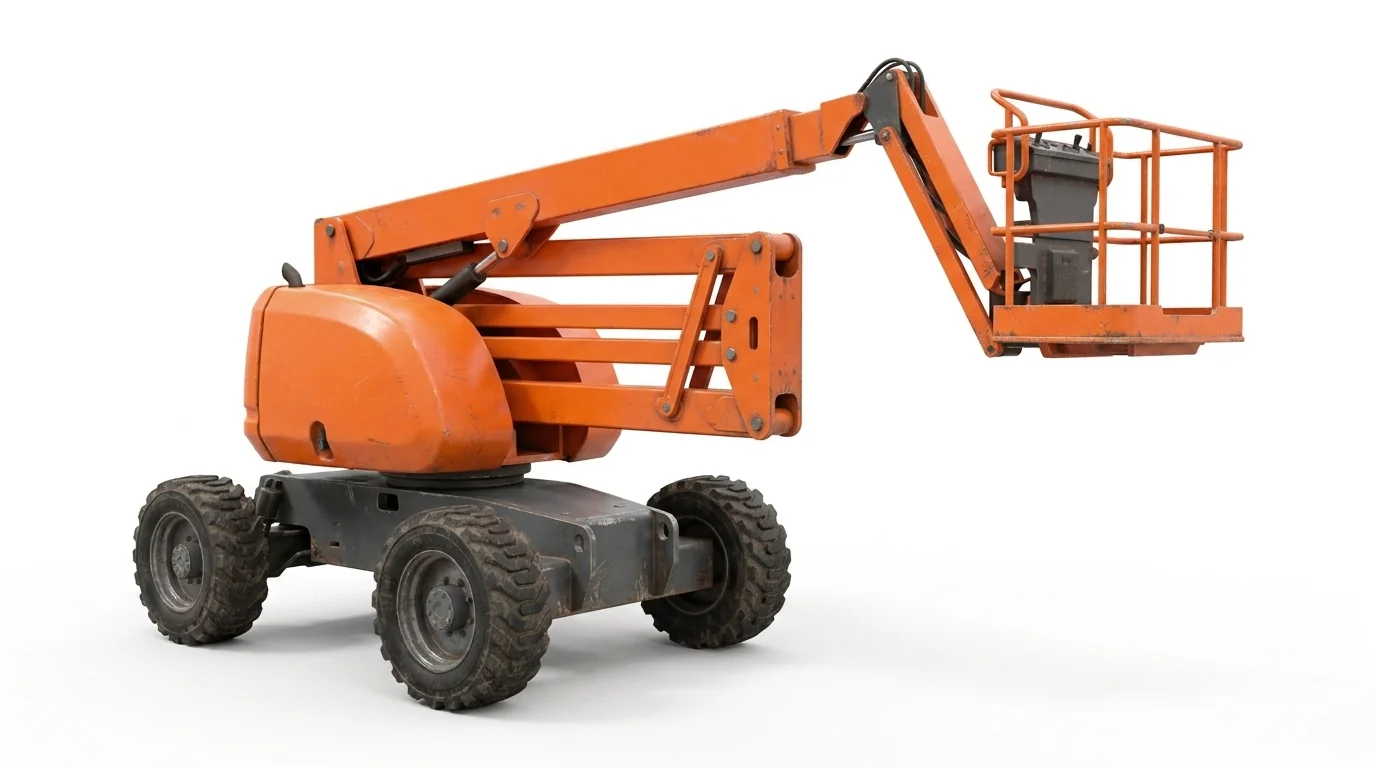
The decision hinges on whether the machine can sit below the task or must reach over an obstruction. If a parapet, canopy, facade projection, or mechanical screen blocks a straight path, an articulating boom’s multiple joints create the needed up-and-over envelope. In hangar bays and high-bay industrial spaces around Daytona Beach, the ability to stow tight and then bend around ducts or cranes often determines success.
Local conditions that affect selection
- Coastal exposure: Salt-laden air accelerates corrosion on pins, platforms, and electrical components. For beachfront hospitality or exterior envelope work, plan for units with coastal-resilient specs and tighter inspection intervals.
- Sandy and loose soils: On unimproved lots or landscaped edges, the deep, sandy profile common in the area can compromise point loading. Wide tires or outriggers and careful pad placement may be necessary to achieve a stable setup.
- Mixed surfaces: Jobs may move from polished interior slabs to pavers or packed sand. Non-marking tires help indoors; rough-terrain packages handle exterior transitions.
Key measurements to narrow the boom type
- Horizontal clearance to the obstacle: Measure how far the machine must reach before clearing the obstruction.
- Vertical clearance above the obstacle: Determine the height needed to get the knuckle past the edge, then the descent to the work face.
- Setback distance: Confirm how close the chassis can sit to the building, canopy line, or interior equipment without violating site procedures.
- Weight and floor loading: For hangars or mezzanines, verify slab ratings where the chassis and outriggers will sit.
Power and tire choices for Daytona Beach jobs
- Electric articulating booms fit interior aviation and healthcare work with ventilation constraints. Expect longer duty cycles when indoors with frequent repositioning.
- Hybrid or diesel rough-terrain models suit exterior facade and signage tasks, especially on sandy or uneven approaches.
Related planning
If most tasks are straight reach with minimal obstacles, compare with a telescopic unit at /telescopic-boom-lift-rental/. For slab-only tasks with vertical access and shorter outreach, see /electric-scissor-lift-rental/ or /vertical-mast-lift-rental/.
Site procedures and conditions govern
Weather, ground bearing, and the selected unit’s instructions set the actual operating limits. Review site rules, wind exposure, and surface conditions before finalizing the boom class.