Ground conditions that change the model size
- Soil type and compaction: Deep sand can rut under point loads. Wider tires and, where provided, stabilizing systems distribute weight; site engineering and the unit’s instructions set the usable range.
- Slope and transitions: Temporary access roads, curb cuts, and ramped entries dictate gradeability and ground clearance. Confirm the steepest path the machine must traverse.
- Matting and staging: Where soils are soft, access mats or staging pads may be required by site procedures, which also affect turning space and platform size selection.
Coastal-resilient considerations
- Salt‑air exposure increases maintenance needs for exterior lifts, especially on waterfront hospitality and stadium work. Units prepared for coastal environments help manage corrosion on rails, cylinders, and electrical connectors.
- Afternoon breezes near open water influence allowable operating windows. The selected unit’s wind ratings and site rules govern platform elevation outdoors.
Platform geometry vs. task layout
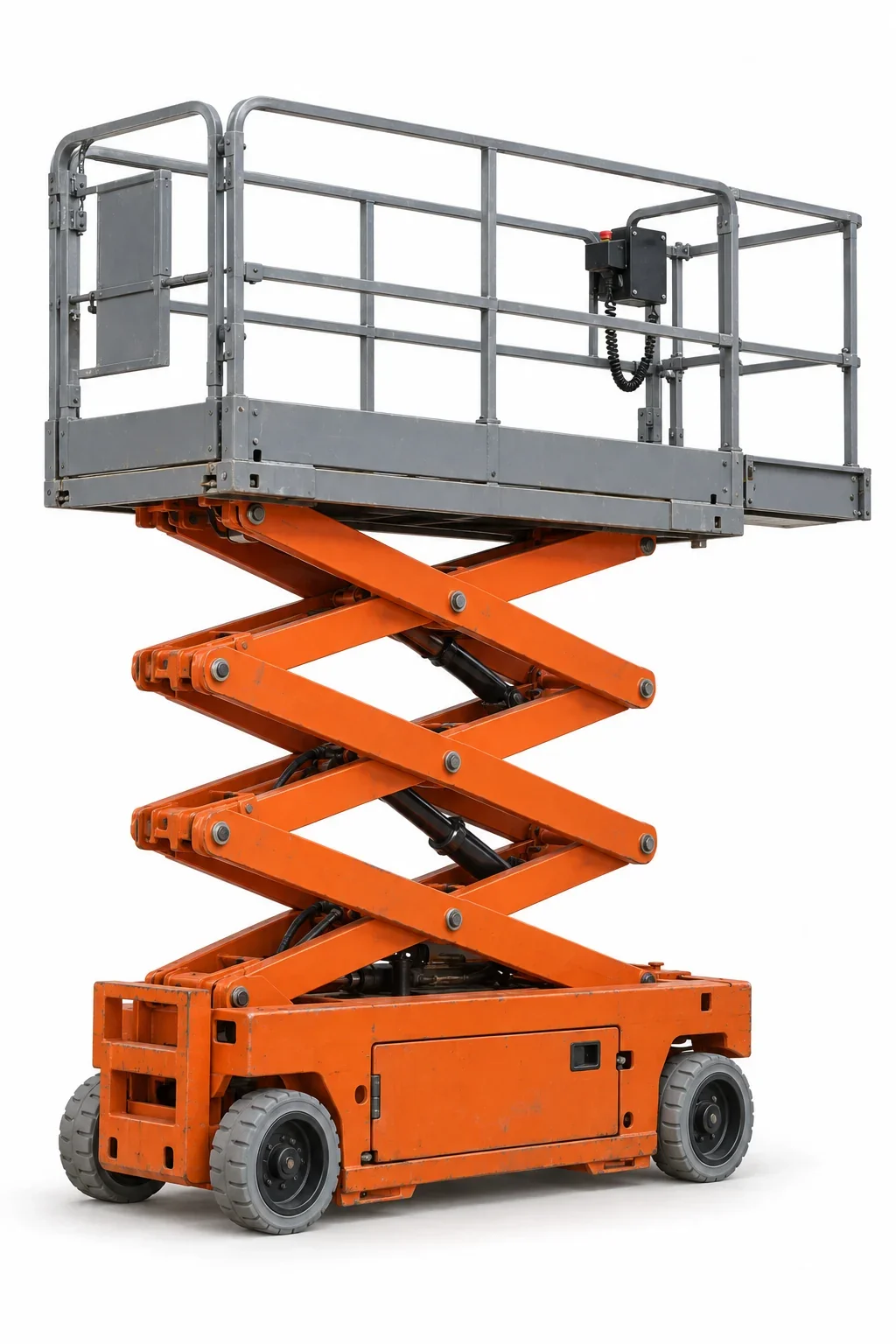
- Straight vertical work lines—panel setting, façade prep, sign installation—favor rough‑terrain scissors with larger decks and roll‑out extensions.
- If the machine cannot sit below the task due to landscaping, fencing, or seating, evaluate reach equipment at /boom-lift-rental/ or broader options at /aerial-lift-rental/.
Sizing checkpoints for Daytona Beach jobsites
- Platform height needed to clear parapets and eaves
- Machine width vs. temporary gates and scaffold bays
- Total weight vs. bearing capacity of sandy subgrades
- Tire type and ground clearance for rutted paths
Where rough‑terrain scissors fit locally
Exterior buildouts at commercial complexes, aviation support areas, and large event facilities often require repeatable up‑down cycles with spacious platforms for materials—without the up‑and‑over reach of a boom.